
8 Ball Kick
execl maroccoPuzzle
4.52.67K Reviews
- Version
- 1.0.2.4
- Installs
- 10.00M
- Age Rating
- Mature 17+
Screenshots
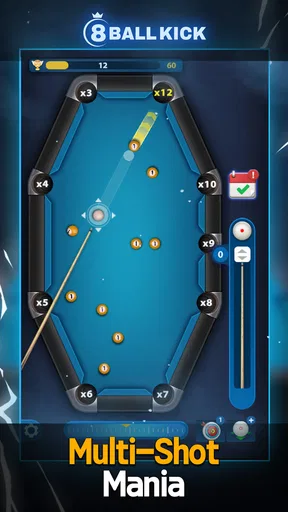
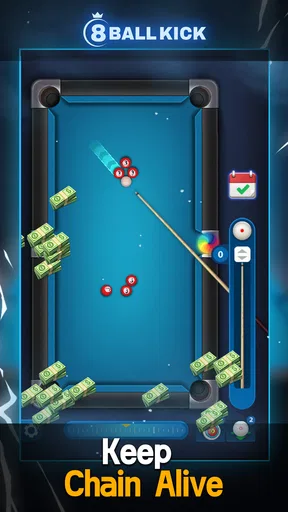
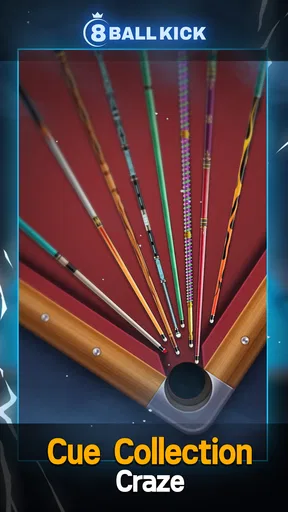
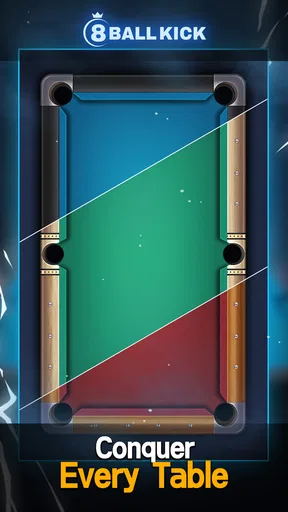
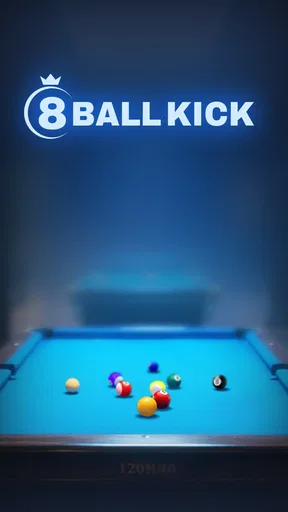
Our Review of 8 Ball Kick
 Analysis by Appyee
I approached 8 Ball Kick expecting a simple pool-themed puzzle game, and that is exactly where its appeal begins. It is easy to understand, quick to start, and built around the satisfying idea of making a single shot count. After spending time with it, I found that the game works best when I stop treating each attempt as a quick tap and start reading the table carefully. The challenge is not only finding a possible shot, but choosing the cleanest one before committing.
This is a free puzzle game from execl marocco, aimed at players who enjoy short sessions with a little pressure behind every decision. Its store summary, “One Shot, Infinite Thrills!”, captures the basic mood without explaining why the format can become surprisingly absorbing. The game is listed for a mature audience aged 17 and over, so it is worth checking that point before installing it for a younger player.
The public response is strong: 8 Ball Kick holds a 4.5 average from around 226 thousand ratings, with more than 10 million installs. Those figures do not automatically make a game good, but they do match my impression that this is designed for immediate accessibility rather than a niche audience of serious billiards players. I would recommend trying it if you like puzzle games that reward patience, positioning, and repeatable technique.
How the basic shot routine feels in everyday play
The most useful way to begin is to establish a repeatable routine. I first look at the full layout instead of touching the controls immediately. I identify the target ball, the likely pocket, and the path the cue ball will take afterward. That last part matters more than it seems. A shot can succeed and still leave the next position awkward, so simply aiming at the nearest pocket is not always the smartest choice.
My normal workflow is deliberately slow at the beginning. I choose a target, trace the intended line mentally, adjust the aim in small movements, and then consider whether the cue ball will remain useful after contact. Only then do I commit to the shot. This habit makes the game feel more like a compact planning puzzle than a reflex challenge.
For a casual session, that process may sound excessive, but it quickly becomes comfortable. It also prevents the most common mistake: changing several things at once. If I alter the angle, force, and intended target together, I cannot tell which decision caused the result. Making one adjustment at a time gives each attempt a purpose, even when it fails.
A realistic use case is a short break during a commute or between household tasks. I can play a few attempts without needing to remember a large story, complicated inventory, or long-term character build. The game suits that kind of stop-and-start routine because the central action is immediately recognizable. At the same time, I would not call every session relaxing. A difficult arrangement can make a supposedly quick break turn into repeated attempts to solve one stubborn position.
What I watch before committing
I pay attention to three things before taking a shot: the direct route to the target, the expected rebound or deflection, and the space available for the cue ball afterward. Even when the game presents a straightforward arrangement, the best-looking line is not always the safest line. A slightly less ambitious shot can be preferable if it leaves a more predictable continuation.
One practical tip is to use the first attempt as an observation round when the layout feels unfamiliar. Rather than immediately chasing the most difficult target, I look at how the aiming control responds and how much movement produces a meaningful change in direction. That small calibration step is especially useful after returning to the game following a break.
I also avoid making frantic corrections while aiming. Small, deliberate movements make it easier to reproduce a successful setup later. When I find a promising line, I pause briefly and confirm that the cue ball is not being sent toward an avoidable obstacle. This is a simple habit, but it turns random experimentation into a method.
Why the one-shot idea changes the puzzle
The one-shot focus gives each decision more weight than a conventional pool game where a poor opening can be repaired over several turns. Here, I think about the whole sequence before acting. That makes the game attractive to puzzle fans who enjoy planning, but less appealing to players who want a relaxed billiards simulation with plenty of room for recovery.
Compared with a standard digital pool alternative, this experience feels more compact and goal-oriented. A traditional pool game may emphasize realistic match flow, opponent play, detailed rules, or a long series of turns. 8 Ball Kick is better suited to someone who wants a focused challenge built around the shot itself. If your priority is authentic competitive pool, another option will probably be more satisfying. If your priority is quick problem-solving with a pool visual theme, this game has a clearer identity.
Settings and habits that make the game easier to read
I recommend checking the available settings before settling into a serious session. I do not change options randomly; I look for anything that affects how comfortably I can aim, see the table, or manage sound. The best setup is the one that removes distractions without making the game feel less readable. Since the core challenge depends on judging a line, visual comfort matters more here than it would in a purely fast-paced arcade game.
Sound is worth considering according to where you play. In a quiet room, audio feedback can make successful shots feel more satisfying. In a public place, I prefer a quieter setup so that the game remains unobtrusive. I also find that reducing distractions helps me notice whether a miss came from a bad angle or from rushing the release.
Screen brightness and viewing angle can affect how confidently I read the table, especially during longer sessions. I keep the display comfortable rather than overly bright, and I avoid playing at an angle that makes the lines look misleading. This is not a secret advantage or a special feature; it is simply a practical adjustment that helps the visual puzzle remain clear.
Players who use a phone with a smaller screen may want to hold it steadily with both hands while aiming. That gives finer control than trying to make a long adjustment with one thumb while also supporting the device. On a larger screen, I have more room to inspect the arrangement, but I still prefer short movements because broad swipes make it easier to overshoot the intended line.
Building a consistent control routine
I get better results when I use the same order every time: inspect, choose the target, establish the angle, check the cue-ball destination, and commit. The sequence sounds basic, but consistency is valuable because it separates a genuine puzzle mistake from a control mistake. If I always skip the same step, I can identify the weakness instead of blaming the game.
Another useful habit is to pause after a miss and describe the error in plain language. Was the target line wrong? Was the shot too forceful? Did the cue ball finish in an unusable place? This short review prevents me from repeating an attempt without learning anything. It is particularly helpful when the same layout invites several tempting but unreliable solutions.
I would not recommend constantly changing the way you aim. Switching between fast swipes, tiny corrections, and different holding positions can make the controls feel inconsistent even when they are not. Pick a comfortable method and stay with it for several attempts. The game rewards familiarity with your own input more than dramatic experimentation.
Faster patterns for short sessions
Once the basic routine feels natural, I start looking for repeatable patterns. The first is to solve the most constrained part of the layout mentally before touching the controls. If one target has only one realistic route, I use that information to shape the rest of the plan. This is faster than beginning with the easiest-looking ball and discovering later that the difficult one has become impossible.
The second pattern is to prefer clean routes over flashy ones. A bank or rebound may be attractive, but a direct line is usually easier to judge when both options are available. I use more complicated paths only when the direct route is blocked or leaves a poor continuation. This approach reduces wasted attempts and keeps the game from turning into guesswork.
The third pattern is to separate solving from execution. I first decide what I want the shot to accomplish, then I focus on making the control movement accurately. Mixing those jobs at the same moment encourages last-second changes. When I already know the plan, the final input becomes calmer and more precise.
For repeat attempts, I try to remember the structure of the position rather than every tiny visual detail. I recall which target caused trouble, where the cue ball ended up, and which route was ruled out. That kind of memory is more useful than simply repeating the same movement. It lets me test a new idea instead of replaying a failed one.
When speed helps and when it hurts
Playing faster is useful once the arrangement is familiar. It keeps easy sections moving and prevents overthinking simple shots. However, speed becomes harmful when I use it to avoid making a decision. If I cannot explain why a shot should work, I slow down. The game is not improved by rushing a line that I have not actually read.
I also avoid treating every successful shot as proof that the method was good. Sometimes a risky attempt works, but that does not make it repeatable. I prefer solutions that I can reproduce with similar aim and force. This is one of the clearest differences between lucky progress and genuine mastery in a puzzle game.
A useful session structure is to alternate focused attempts with brief breaks. After several misses, my corrections become emotional rather than analytical. Stepping away for a moment resets my attention and often makes the layout easier to understand when I return. This matters for players who intend to use the game as a quick daily distraction rather than a long uninterrupted activity.
Where the challenge reaches its limits
The same simplicity that makes 8 Ball Kick accessible can also limit its appeal. Players looking for a deep pool simulation may find the puzzle framing too narrow. The experience is centered on solving shots, not on reproducing every part of a full billiards match. That is not a flaw in itself, but it means the game should be judged as a focused puzzle rather than as a complete replacement for a competitive pool table.
I also think the mature age rating deserves attention. Someone searching for a family-friendly puzzle should not assume that the billiards theme makes the game suitable for children. Parents should check the rating before handing over a device, while adult players can treat it as an important part of the installation decision.
Another limitation is the potential for repetition. If you enjoy learning a system and refining the same type of decision, the repeated shot structure can be satisfying. If you need constant changes in genre, story, or mechanics, the narrow focus may wear thin. I would choose this for concentrated bursts, not as my only game.
The current version is 1.0.2.4, and it runs on Android 7.0 or later. That broad compatibility makes it practical for people using older Android devices, although the actual comfort of play will still depend on screen size and touch responsiveness. Before installing, I would check that the device meets the minimum system requirement and that the mature rating fits the intended player.
Who should choose another kind of game
I would steer away from this title if you mainly want online competition, a detailed career mode, or a realistic match simulator. A dedicated pool game will be a better match for those goals. I would also skip it if you dislike repeating a puzzle after a near miss, because the satisfaction here comes from gradually improving a decision rather than moving through a large variety of activities.
On the other hand, I think it is a strong fit for players who enjoy spatial reasoning and short attempts. It can work well for someone who likes testing an idea, learning from a failed angle, and trying again without investing in a long session. The free price also lowers the barrier to experimenting with it, though free access alone should not be mistaken for a guarantee that every player will enjoy the focused format.
My verdict after settling into the rhythm
8 Ball Kick succeeds because it keeps its central idea clear. Every attempt asks me to read the arrangement, choose a route, and trust a controlled shot. The game does not need a complicated explanation to become engaging; its difficulty comes from the gap between seeing a possible solution and executing a reliable one.
My strongest recommendation is to approach it with a small set of habits: inspect the entire layout, make one adjustment at a time, favor repeatable routes, and review misses instead of immediately repeating them. Those choices make the experience more rewarding and help reveal whether the game suits you. They also prevent the common frustration of blaming the controls for decisions that were never fully planned.
For a free puzzle game with a pool-inspired structure, the audience is easy to identify. It is a good choice for adults who want compact challenges, enjoy careful aiming, and do not mind retrying a difficult shot. It is less suitable for children because of the age rating, less suitable for simulation fans who want full-match realism, and less suitable for players who need constant mechanical variety.
After trying both quick attempts and more deliberate sessions, I would keep it installed as a focused game for spare moments. Its best quality is not the promise of endless excitement in the abstract, but the small satisfaction of turning an uncertain table into a clear plan. When I make the shot after thinking it through, the result feels earned. That is enough to make 8 Ball Kick worth a look for the right kind of puzzle player.
Verdict
Strengths of 8 Ball Kick
- Simple controls make it easy for beginners to start playing.
- Quick matches are suitable for short gaming sessions.
- Pool-inspired gameplay offers a familiar and accessible experience.
- Playable offline, making it useful without a constant internet connection.
- Lightweight design should run smoothly on many Android devices.
Limitations of 8 Ball Kick
- Gameplay may become repetitive after extended play.
- Limited depth may disappoint experienced pool players.
- Ads can interrupt the experience between matches.
- Physics may occasionally feel less realistic than real billiards.
- Progression and customization options may feel relatively limited.
Other Releases by execl marocco
View All
Ace Pool Elite
Puzzle4.5
Similar Picks in This Category
View All
Block Blast!
HungryStudio4.8

Braindom: Brain Games Test
Lahana Game Studio4.6

AMAZE!
CrazyLabs LTD4.6

Sudoku - Classic Sudoku Puzzle
Oakever Games4.7

Art Puzzle - Puzzle Games
Easybrain4.8

Amaze GO!
Oakever Games4.9
Frequently Asked Questions
What is 8 Ball Kick and how is it played?
8 Ball Kick is a casual billiards-style game that combines traditional pool mechanics with a kick-based shooting format. Instead of simply aiming for standard pockets, you need to judge angles, power, and ball movement carefully to complete each challenge. The controls are generally designed for touchscreens, allowing you to adjust your aim and shot strength before releasing the cue. It is easy to understand, but later levels require accurate timing and planning.
Is 8 Ball Kick free to download and play?
8 Ball Kick can generally be downloaded for free, allowing players to try the main gameplay without paying upfront. However, as with many mobile games, optional purchases may be available for extra content, virtual items, upgrades, or other conveniences. Before downloading, it is worth checking the store listing for the current pricing model and reviewing the in-app purchase information, especially if children will be using the device.
Does 8 Ball Kick require an internet connection?
The connection requirements may depend on the version and features available on your device. Basic solo challenges may work without a constant internet connection, which makes the game suitable for short sessions while traveling or when mobile data is unavailable. Online competitions, advertisements, cloud saves, updates, or other connected features may require access to the internet. It is best to test offline play after installation rather than assuming every mode works without connectivity.
Is 8 Ball Kick suitable for beginners?
Yes, 8 Ball Kick is approachable for beginners because its core idea is familiar to anyone who has played pool or other aiming games. The early stages usually provide enough time to learn how the aiming system, shot power, and ball physics work. Nevertheless, success depends on more than tapping quickly: players must estimate rebounds and control the strength of each shot. Beginners may need a little practice before consistently completing harder challenges.
Are there advertisements or in-app purchases in 8 Ball Kick?
The game may include advertising and optional in-app purchases, depending on the platform, region, and current release. Advertisements can appear between attempts or stages, while purchases may offer cosmetic items, additional resources, or other gameplay-related benefits. These elements do not necessarily prevent you from enjoying the game, but they can affect the overall experience. Check the official Google Play or App Store listing for the latest details before installing.
Play our best games!


